

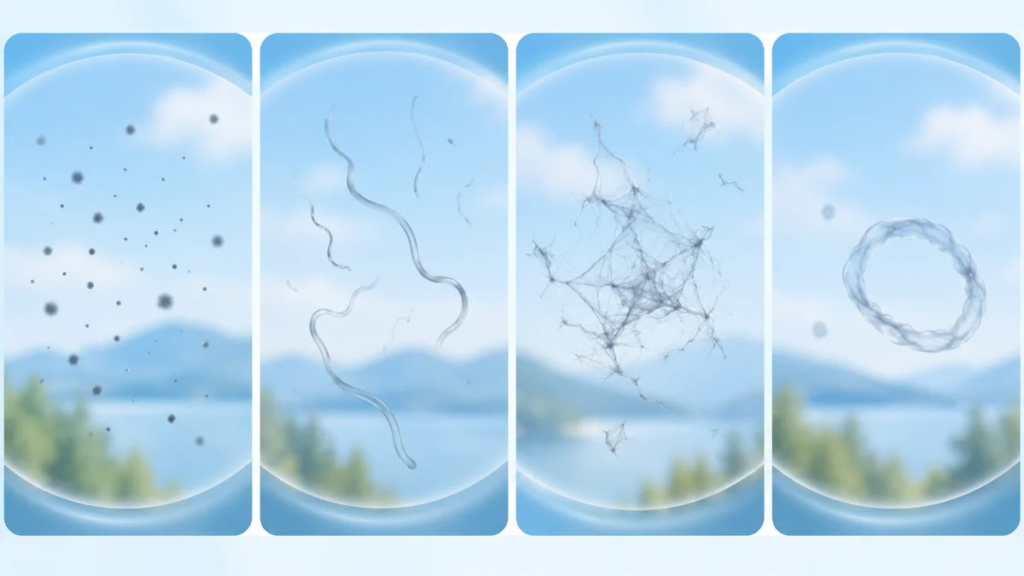
Types of Eye Floaters: Pictures and What Each Shape Means
You see something drift across your vision. It moves when your eye moves, vanishes when you try to look at it directly, and shows up most clearly against a bright sky or white wall.
Is it a cobweb? A thread? A shadow?
Knowing which type of floater you’re seeing helps you understand what’s happening inside your eye and whether it’s worth a closer look from a doctor.
This visual guide breaks down the most common types of eye floaters, what causes each shape, and when a floater warrants more than a passing thought.
What Causes Eye Floaters
The vitreous humor is a gel-like substance that fills about 80% of your eye, helping it hold its round shape.
When you’re young, this gel is clear and firm. As you age, the vitreous starts to shrink and become more liquid. Small fibers within it clump together, casting tiny shadows on your retina. Those shadows are what you see as floaters.
This process is called vitreous degeneration, and it eventually affects nearly everyone. The shape of your floater depends on how those fibers clump and where they float within the vitreous.
Cobweb Floaters
What they look like:
Cobweb floaters appear as branching, web-like structures that drift slowly across your field of vision. Picture a loose, tangled net or the irregular strands of a spider web floating just out of focus. They often seem to settle toward the bottom of your vision when your eyes stop moving.
What causes them:
Cobwebs form when multiple collagen fibers in the vitreous clump together into irregular, connected strands. They’re among the most common types of floaters and typically increase with age.
Who sees them most:
Adults over 50, people who are nearsighted, and anyone who has had cataract surgery tend to notice cobweb floaters more frequently.
String or Thread-Like Floaters
What they look like:
These floaters appear as single lines, squiggles, or wavy threads. Some look like a piece of hair or a thin worm swimming through your vision. They may be short and straight or long with curves and bends.
What causes them:
String floaters are individual collagen fibers or small chains of fibers that have separated from the vitreous gel. As the vitreous liquefies with age, these strands float more freely.
What to expect:
Thread-like floaters tend to be most visible in bright light and may seem to swirl or drift when you move your eyes quickly.
Shadow or Dust-Like Floaters
What they look like:
Shadow floaters appear as small, hazy clouds or scattered specks, similar to dust particles floating in a sunbeam. They’re less defined than cobwebs or strings and can look grayish or semi-transparent. Some people describe them as a slight film or fog in part of their vision.
What causes them:
These form when tiny clusters of cells or very fine collagen particles float within the vitreous. They cast softer, more diffuse shadows on the retina compared to denser clumps.
When they appear:
Dust-like floaters are common after the vitreous starts to pull away from the retina, a process called posterior vitreous detachment. This typically happens in people over 60, but can occur earlier in those who are highly nearsighted.
Ring-Shaped Floaters (Weiss Ring)
What they look like:
Ring floaters appear as circular or oval shapes, sometimes looking like a loose “O” or a doughnut drifting through your vision. They’re often larger and more distinct than other floater types. The ring may appear broken or incomplete.
What causes them:
A ring-shaped floater, called a Weiss ring, forms when the vitreous separates from the optic nerve at the back of your eye during posterior vitreous detachment. The ring is the leftover tissue from where the vitreous was once attached.
What it means:
A Weiss ring usually signals that the vitreous has fully separated from the optic nerve. While this is typically a normal aging process, the period when it occurs carries a slightly higher risk of retinal tears. If you notice a new ring floater, especially with flashes of light, it’s worth getting checked.
Dot or Spot Floaters
What they look like:
These are the simplest floaters: small, dark dots or spots that drift across your vision. They may appear alone or in clusters. Some look like tiny insects or pepper flakes.
What causes them:
Dot floaters are usually small clumps of collagen or single cells floating in the vitreous. Red blood cells from a minor vitreous hemorrhage can also appear as dark spots.
The key detail:
A few scattered spots are common and usually harmless. A sudden shower of many new spots, especially with flashes of light or a shadow in your peripheral vision, needs prompt evaluation.
When to See a Doctor
Most eye floaters are a normal part of aging and don’t need treatment. However, certain changes suggest something more serious, like a retinal tear or detachment.
Seek care right away if you notice:
- A sudden increase in the number of floaters
- Flashes of light in your peripheral vision
- A shadow or curtain spreading across part of your vision
- Floaters after an eye injury
- Floaters combined with eye pain or redness
A retinal tear can progress to retinal detachment, a medical emergency that can cause permanent vision loss if not treated promptly. Eyes Now offers emergency eye care for urgent symptoms that shouldn’t wait.
Floaters worth monitoring:
- Gradual increase in floaters over months or years
- Floaters that haven’t changed since your last exam
- Floaters you’ve had for a long time that don’t interfere with daily activities
A routine eye exam can confirm whether your floaters are the harmless kind or something that needs closer attention.
What Happens During a Floater Exam
Your eye doctor will examine the inside of your eye to check the health of your vitreous and retina. At Eyes Now, this typically includes Optomap retinal imaging, which captures a wide view of your retina without dilating drops for most patients.
If your doctor finds anything that needs a closer look, they’ll discuss next steps with you. For most patients, the news is simple: your floaters are age-related, your retina looks healthy, and no treatment is needed.
If you have diabetes or other conditions that affect your eye health, a diabetic eye exam or disease management visit can catch problems early.
Ready to get your floaters checked?
At Eyes Now, our doctors can identify your specific floater type and recommend the best course of action.
Book your appointment online, call your nearest location, or walk in on any day of the week.
Still Wondering About Eye Floaters?
Can eye floaters go away on their own?
Floaters don’t disappear completely, but they often settle below your line of sight over time. Your brain also adapts and learns to ignore them. Most people find floaters less noticeable after a few weeks or months.
Do certain activities make floaters worse?
Floaters don’t get worse from reading, screen time, or being in bright light. Those activities just make floaters easier to see against uniform backgrounds. The floaters themselves aren’t changing.
Can children get eye floaters?
Yes, though it’s far less common. Children can develop floaters from eye injury, inflammation, or conditions like juvenile diabetes. A child who mentions seeing spots or “bugs” in their vision should have an eye exam.
Is there treatment for bothersome floaters?
For floaters that seriously interfere with vision, procedures such as laser vitreolysis or vitrectomy surgery are available. These carry risks and are typically reserved for severe cases. Most people don’t need treatment. An adult eye exam can help you understand whether your floaters fall into the treatable category.
When Those Drifting Spots Deserve a Closer Look
Eye floaters come in recognizable shapes, including cobwebs, strings, shadows, rings, and dots. Most are linked to normal age-related changes inside the eye. What matters most isn’t the shape, but whether something suddenly changes.
If your floaters have stayed the same and your vision feels normal, mention them at your next routine exam. If you suddenly notice more floaters, flashes of light, shadows, or vision loss, it’s worth having your eyes checked promptly.
Eyes Now offers Emergency Eye Care when changes in your vision need a closer look. If you’re unsure whether what you’re seeing is worth checking, getting an answer can bring some peace of mind.
Disclaimer: This blog is general information, not a diagnosis. If something feels urgent, don’t wait for a blog post; call your nearest Eyes Now location or seek immediate care. For everything else, book your exam, and we’ll take it from there.