

What Causes Eye Floaters? Medical and Age-Related Factors Explained
Those drifting spots, threads, or cobwebs in your vision can feel alarming, especially when they seem to appear out of nowhere.
Most people assume floaters mean something is wrong with their eyes. The reality is more nuanced.
While floaters are extremely common and usually harmless, they can occasionally signal a condition that needs immediate attention. Understanding the difference between normal floaters and warning signs can help you know when to wait and when to act.
How the Vitreous Creates Floaters
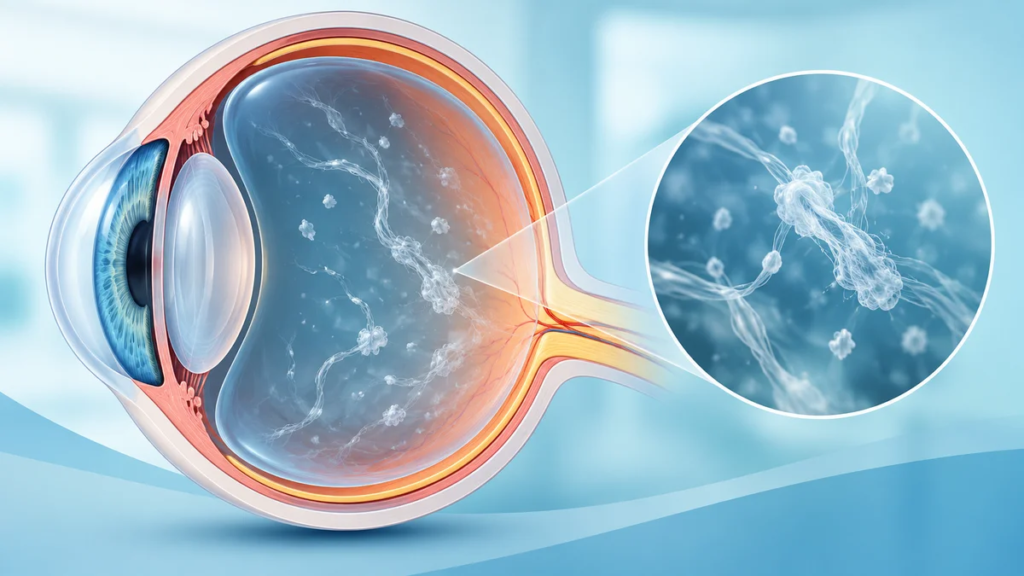
The vitreous is a gel-like substance that fills about 80% of your eye and helps it maintain its round shape.
When you’re young, the vitreous has a thick, consistent texture. As you age, it begins to liquefy and shrink. Small fibers within the vitreous clump together and cast shadows on your retina, the light-sensitive tissue at the back of your eye. Those shadows are what you perceive as floaters.
This process is completely normal. Nearly everyone will experience some degree of vitreous change over their lifetime, and most floaters that develop this way pose no threat to your vision.
Age-Related Vitreous Changes
Age is the most common cause of eye floaters.
Between the ages of 50 and 75, the vitreous undergoes significant changes. The gel shrinks and pulls away from the retina in a process called posterior vitreous detachment, or PVD. PVD is the most frequent cause of floaters and usually happens without complications.
During PVD, you might notice a sudden increase in floaters, sometimes accompanied by brief flashes of light. For most people, this is a normal part of aging. The brain typically adjusts within weeks to months, making the floaters less noticeable.
However, PVD isn’t always harmless. In some cases, the vitreous can tug on the retina hard enough to cause a tear. That’s why a sudden shower of new floaters, especially with flashing lights, warrants a prompt eye exam.
Risk factors that can accelerate vitreous changes include:
- Nearsightedness (myopia)
- Previous eye surgery, such as cataract removal
- Eye trauma or injury
- Inflammation inside the eye
Inflammation Inside the Eye
Uveitis, or inflammation of the uvea (the middle layer of the eye), can release inflammatory cells and debris into the vitreous. These particles create floaters that may appear suddenly and in greater numbers than typical age-related floaters.
Uveitis has many potential causes, including autoimmune conditions, infections, and eye injuries. Beyond floaters, uveitis often causes eye pain, redness, light sensitivity, and blurred vision. Untreated uveitis can lead to permanent vision damage.
Eyes Now provides eye disease diagnosis and management for conditions like uveitis, helping identify the underlying cause and coordinating treatment.
Bleeding in the Eye
Bleeding into the vitreous, called vitreous hemorrhage, can cause floaters that range from a few new spots to a dense cloud that severely impairs vision.
Blood cells floating in the vitreous cast shadows on the retina, creating the appearance of dark spots, streaks, or a reddish tint.
Common causes of vitreous hemorrhage include:
- Diabetic retinopathy
- Retinal tears
- Trauma to the eye
- Blood vessel abnormalities
Diabetic retinopathy deserves special attention. High blood sugar damages the small blood vessels in the retina over time, causing them to leak or grow abnormally. These fragile new vessels bleed easily.
People with diabetes are at significantly higher risk for vitreous hemorrhage and should have regular diabetic eye exams to catch changes early.
Retinal Conditions
The retina sits at the back of your eye and converts light into signals your brain interprets as vision. Several retinal conditions can cause floaters, some of them serious.
Retinal tears occur when the vitreous pulls on the retina with enough force to create a break. A tear by itself may not cause pain, but it often produces a sudden burst of floaters and flashing lights. Without treatment, fluid can seep through the tear and lift the retina away from its supporting tissue, leading to retinal detachment.
Retinal detachment is a medical emergency. The retina can’t function properly when separated from its blood supply, and permanent vision loss can occur within hours to days.
Symptoms include a sudden increase in floaters, flashes of light, and a shadow or curtain moving across your field of vision. If you notice these signs, seek emergency eye care immediately.
Lattice degeneration is a condition where the peripheral retina thins and becomes more vulnerable to tears. People with lattice degeneration are at higher risk for retinal problems and may notice floaters as the condition progresses.
Other Medical Causes
While less common, several other factors can contribute to floaters:
- Eye tumors: Rare growths inside the eye can shed cells into the vitreous.
- Medications: Certain drugs, particularly some used in eye injections, can cause temporary floaters.
- Migraine with aura: Visual disturbances during migraines can mimic floaters, though these typically resolve when the migraine ends.
- Asteroid hyalosis: This condition involves calcium deposits suspended in the vitreous. It usually doesn’t affect vision and is often discovered during routine exams.
When Floaters Require Immediate Care
Most floaters are harmless, but certain symptoms indicate a potential emergency. Contact an eye care provider right away, or seek emergency care, if you experience:
- A sudden increase in floaters, especially a “shower” of new spots
- Flashes of light, particularly in your peripheral vision
- A shadow or dark curtain across part of your vision
- Sudden blurry vision or vision loss
- Eye pain along with new floaters
These symptoms can indicate retinal tears, retinal detachment, or vitreous hemorrhage. Early intervention often prevents permanent vision damage.
Diagnosis and Treatment
Diagnosing the cause of floaters requires a comprehensive eye exam. Your doctor will evaluate your vitreous and retina, often using advanced imaging to get a detailed view.
At Eyes Now, Optomap retinal imaging captures a wide-angle picture of your retina without needing dilation drops for most patients. OCT scans work almost like a CT scan for your eye, detecting early signs of retinal problems, glaucoma, and other conditions before symptoms become obvious.
Treatment depends on the underlying cause:
- Age-related floaters: Usually require no treatment. Most people adapt over time as the brain learns to filter them out.
- Uveitis: Treated with anti-inflammatory medications or antibiotics if infection is involved.
- Vitreous hemorrhage: May clear on its own, or may require surgery depending on severity and cause.
- Retinal tears: Often treated with laser therapy or cryotherapy to seal the tear and prevent detachment.
- Retinal detachment: Requires surgical intervention.
For floaters that significantly impair quality of life and don’t resolve, a procedure called vitrectomy can remove the vitreous gel entirely. This surgery carries risks and is typically reserved for severe cases.
Get Your Eyes Checked
If your floaters are new, changing, or accompanied by other symptoms, don’t wait for answers.
Walk in, call your nearest Eyes Now location, or book your appointment online. We’ll see you fast, thoroughly check your retina, and let you know exactly what’s going on.
Still Have Questions About What Causes Eye Floaters?
Can eye floaters go away on their own?
Floaters caused by age-related vitreous changes rarely disappear completely, but your brain typically adapts and makes them less noticeable over weeks to months. Floaters from vitreous hemorrhage may clear as the blood reabsorbs, though this can take weeks or longer depending on the amount of bleeding.
Are eye floaters more common in people with diabetes?
Yes. Diabetic retinopathy causes abnormal blood vessel growth in the retina, and these vessels bleed easily. This makes floaters and vitreous hemorrhage more common in people with poorly controlled or long-standing diabetes. Regular diabetic eye exams help catch these changes before they threaten vision.
Do eye floaters mean I need glasses?
Floaters and the need for corrective lenses are separate issues. However, people with high myopia (severe nearsightedness) are more likely to develop floaters because the elongated shape of their eyes puts more stress on the vitreous and retina. An eye exam can evaluate both your floaters and your prescription needs.
Can stress cause eye floaters?
Stress itself doesn’t cause the physical changes in the vitreous that create floaters. However, stress can increase your awareness of existing floaters and make them seem more prominent. Fatigue, eye strain, and dehydration may also heighten your perception of floaters already present.
When Floaters Are Worth a Closer Look
Eye floaters can have several causes, from common age-related changes inside the eye to conditions that need prompt attention. What matters most is how they start and whether anything else changes with your vision.
A sudden shower of floaters, flashes of light, or a shadow across your vision shouldn’t be ignored. These symptoms can indicate a retinal problem that requires prompt evaluation. For floaters that have been stable for a while, a comprehensive eye exam can help confirm what’s going on and whether anything needs closer monitoring.
If your floaters suddenly change or come with flashes or vision loss, we also offer Emergency Eye Care for symptoms that shouldn’t wait.
Disclaimer: This blog is general information, not a diagnosis. If something feels urgent, don’t wait for a blog post; call your nearest Eyes Now location or seek immediate care. For everything else, book your exam, and we’ll take it from there.